Old Site Menu

Book

Missive #627 Published 31 December 2025

Nearly half a century before George Orwell wrote 1984, G.K. Chesterton wrote The Napoleon of Notting Hill, a futurist fantasy also set in 1984. In this startling comic novel, Chesterton conjures up a London neighborhood that has become an independent city, fond of pageantry and traditional ways, isolated by high walls from the rest of the world. When its rights and autonomy are threatened by modernizing neighbors, war breaks out. It is a war fought not with astounding new weapons, but with swords and battle-axes. It is oddly prophetic, about large nations swallowing little nations, and local communities struggling to maintain their independence from outside control. It is also a great story, with wonderful dialogue and rich, humorous characters.

Missive #627 Read More »

Missive #626 Published 30 December 2025

I understood about half of what this sociologist, philosopher and author wrote. He does not use academic jargon very much but does footnote his writing as they always do. The hardest reading for me was his very complex and sometimes run-on sentences. Read at your own risk.

Missive #626 Read More »

Missive #625 Published 29 December 2025

I read some books a long time ago but have forgot what they were so I'm going back and starting over. Joe Allston is a character in this book and also in All the Little Live Things which I will read next. He is also thematically and structurally linked to Angle of Repose through the shared use of an older, reflective narrator that I will read after that. Then there are a lot more to choose from.

Missive #625 Read More »

Missive #623 Published 27 December 2025

The review that I have copied was written soon after the book was published in French. It has subsequently been published in 21 other languages but not in English. The author of the review "protests too much" in my opinion and I think that is one of the reasons it has not been translated into English. The Google translation that I read was poor but I think Todd made good points.

Missive #623 Read More »

Missive #620 Published 24 December 2025

This is the forth book in the series with one more to read. This one is far and away more a chick book than the previous three. Very little military action or suspense and more bodice ripping. I'll read the last book in the series and then move on to the author's Wild Country series and hope that she moves toward more suspense.

Missive #620 Read More »

Missive #619 Published 22 December 2025

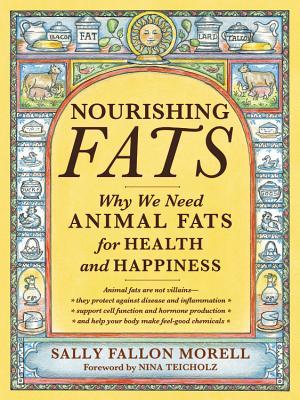
This is a very interesting book. It might be a bit over the top with some of the medical and scientific terminology but is readable. Much like with the COVID jab you need not follow the science regarding saturated fats just follow the money.

Missive #619 Read More »

Missive #616 Published 17 December 2025

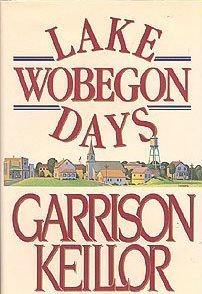
Keillor leads here from his strength—humor based on a true grip on the real—in this epic of Lake Wobegon, the imaginary small Minnesota town celebrated in Keillor's weekly monologues on "Prairie Home Companion," his show on Public Radio. Keillor's fans will grab it, but word should get out to people who never heard of him: like Mark Twain, Keillor is a highly sophisticated teller of tales (his stories have appeared in The New Yorker) who gets to the essence of everyday America. There are some belly laughs in "Wobegon," many chuckles—and always the pleasure of recognition. The book casually mixes autobiographical stretches with stories about the inhabitants of the town that can't be found on the Minnesota map, along with its history and mores.

Missive #616 Read More »

Missive #615 Published 15 December 2025

Author Gene Logsdon—whom Wendell Berry once called “the most experienced and best observer of agriculture we have”—has a notion: That it is a little easier for gardeners and farmers to accept death than the rest of the populace. Why? Because every day, farmers and gardeners help plants and animals begin life and help plants and animals end life. They are intimately attuned to the food chain. They understand how all living things are seated around a dining table, eating while being eaten. They realize that all of nature is in flux.
Gene Everlasting contains Logsdon’s reflections, by turns both humorous and heart-wrenching, on nature, death, and eternity, all from a contrary farmer’s perspective. He recounts joys and tragedies from his childhood in the 1930s and ‘40s spent on an Ohio farm, through adulthood and child-raising, all the way up to his recent bout with cancer, always with an eye toward the lessons that farming has taught him about life and its mysteries.

Missive #615 Read More »

Missive #613 Published 13 December 2025

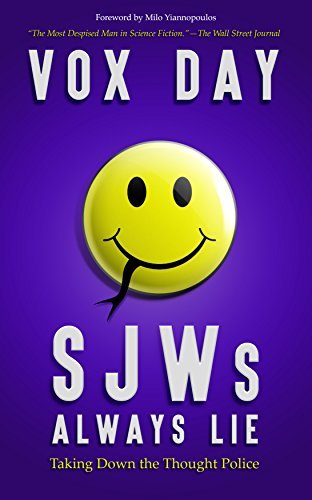
Social Justice Warriors have plagued mankind for more than 150 years, but only in the last 30 years has their ideology become dominant in the West. Having invaded one institution of the cultural high ground after another, from corporations and churches to video games and government, there is nowhere that remains entirely free of their intolerant thought and speech policing.

Because the SJW agenda of diversity, tolerance, inclusiveness, and equality flies in the face of both science and observable reality, SJWs relentlessly work to prevent normal people from thinking or speaking in any manner that will violate their ever-mutating Narrative. They police science, philosophy, technology, and even history in order to maintain the pretense that their agenda remains inevitable in a modern world that contradicts it on a daily basis.

Missive #613 Read More »

Missive #611 Published 10 December 2025

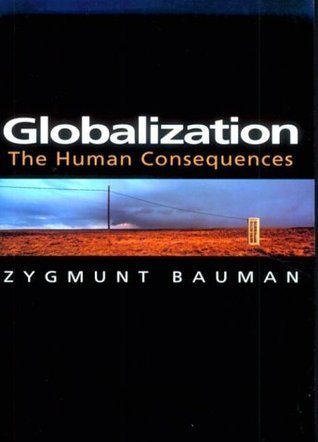
The word "globalization" is used to convey the hope and determination of order-making on a worldwide scale. It is trumpeted as providing more mobility—of people, capital, and information—and as being equally beneficial for everyone. With recent technological developments—most notably the Internet—globalization seems to be the fate of the world. But no one seems to be in control. As noted sociologist Zygmunt Bauman shows in this detailed history of globalization, while human affairs now take place on a global scale, we are not able to direct events; we can only watch as boundaries, institutions, and loyalties shift in rapid and unpredictable ways. Who benefits from the new globalization? Are people in need assisted more quickly and efficiently? Or are the poor worse off than ever before? Will a globalized economy shift jobs away from traditional areas, destroying time-honored national industries? Who will enjoy access to jobs in the new hierarchy of mobility?

Missive #611 Read More »