Old Site Menu

Book

Missive #667 Published 24 February 2026

Dark Mountain: Issue 1 is a book-length collection of new writing that goes deep into the roots of our culture, addressing the questions raised by the Dark Mountain manifesto: what do we do after we stop pretending that our way of living can be made "sustainable"? And where do we find new stories with which to ground ourselves, as that way of living passes?

Missive #667 Read More »

Missive #665 Published 21 February 2026

Sharpe's Gold is the second (though ninth in chronological order) historical novel in the Richard Sharpe series by Bernard Cornwell first published in 1981. The story is set in August 1810 and features the destruction of Almeida during the Peninsular War.

Missive #665 Read More »

Missive #663 Published 18 February 2026

The astonishing inside story of how Bud Light lost its position as the most popular beer in the United States from a longtime Anheuser-Busch executive.
Anson Frericks, a former president at Anheuser-Busch—formerly the home of America’s most popular brewery—watched as the company unraveled at the hands of globe-trotting financiers and progressive middle management.
Rather than pursue shareholder profits, Anheuser-Busch suddenly became focused on stakeholder capitalism and the vague mandates of environment, social, and governance (ESG). This ill-advised change cumulated in the shocking evaporation of $30 billion in market cap after releasing an advertising campaign starring political activist Dylan Mulvaney.

Missive #663 Read More »

Missive #662 Published 16 February 2026

The Invisible Coup is not about chaos at the border. It is about something far more unsettling: how one of the most consequential transformations in modern American history unfolded quietly, incrementally, and without the consent of the people.

For decades, Americans have been told a simple story about mass migration. That it is spontaneous. Humanitarian. Inevitable. That the only moral response is acceptance, and the only alternative is cruelty. But beneath that familiar narrative lies a deeper reality, one shaped by policy design, institutional power, economic incentives, and global strategy. A reality in which migration has become one of the most effective political instruments ever deployed against a democratic nation.

Missive #662 Read More »

Missive #660 Published 14 February 2026

Awesome first-fiction venture that immediately thrusts the author into P.D. James' dark orbit—with a peel-the-layers-off tale of utter emotional devastation, relieved only by the deep sensitivity and kindnesses of the detective hero, Scotland Yard Inspector Thomas Lynley.
Lynley, handsome, wealthy, and brilliant, is "so damnably charming" that pugfaced, ill-tempered probational partner Det. Sgt. Barbara Havers "couldn't understand why every criminal in the city simply didn't surrender to accommodate him." Now, Lynley must resolve a beheading already confessed to by the victim's obesely bloated daughter Roberta, who was found next to William Teys' body dressed in her Sunday best.

Missive #660 Read More »

Missive #658 Published 12 February 2026

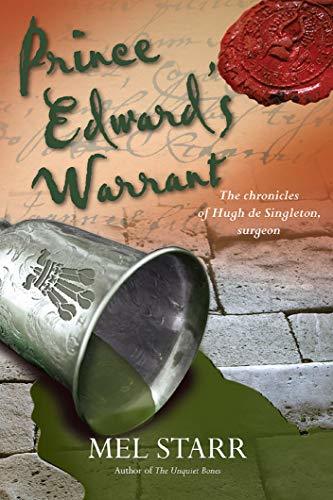
Lord Gilbert Talbot must provide soldiers for Prince Edward's battle in France. He wishes his surgeon--Hugh de Singleton--to travel with the war party to tend any injuries. Among those on the road is Sir Simon Trillowe, Hugh's old nemesis, who had once torched Hugh's house.
Finding himself in the same war party, Hugh resolves to watch his back in the presence of the knight, who is still holding a grudge. But it is Sir Simon who should not have turned his back....
When Trillowe's body is found, many suspect Hugh has wreaked revenge on his adversary. To clear his name, Hugh must once again riddle a reason for murder.

Missive #658 Read More »

Missive #657 Published 9 February 2026

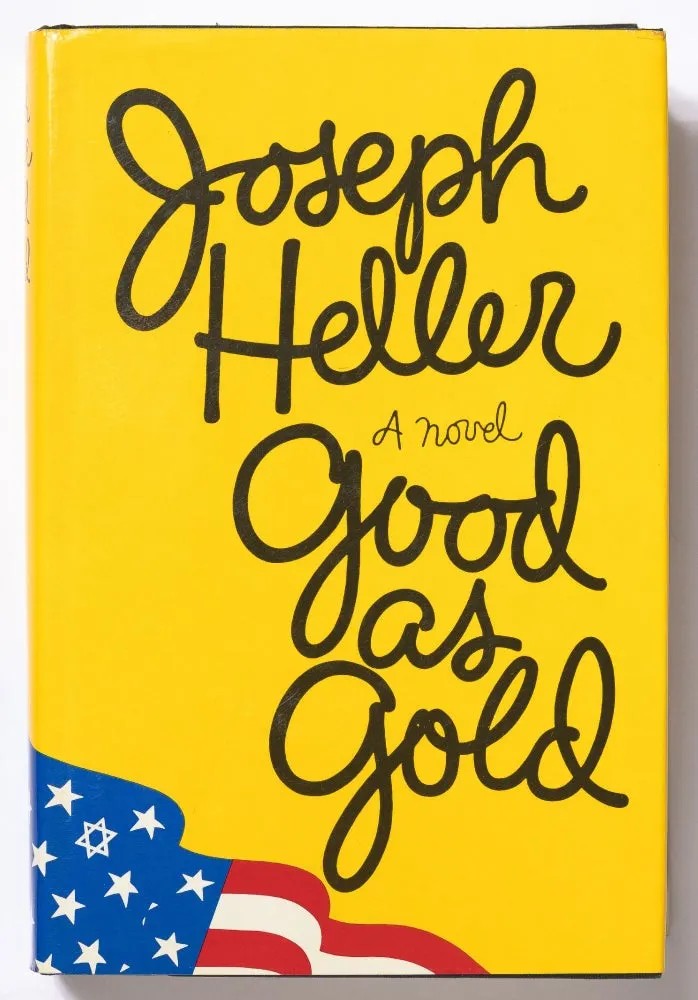
Coming up with a judgment on Something Happened (you'll wait a while for that something to happen — nothing does until the shattering clincher) should be the hottest game of Russian roulette in town this fall. There's probably more riding on this book than any other in terms of author anticipation and publisher expectation. It runs close to 600 pages and is full of repetition which can be one of those suicidal assets ("call the repetition perseveration" — that's Heller) in what amounts to a story without a story sans the pseudo of those now dated anti-novels. Heller's novel, Heller's tour de verbal force, Heller's stomp then, is a representation of the underachieved contemporary man booby trapped all the way from his harassment at home to the office where he's making his way up over someone else's body.I read Catch 22 many years ago and plan on rereading it but thought I would read the authors second book first.
I liked this book more than the Kirkus reviewer did from what he says. It is long but I did nor find it to be repetitious to the point that it was bothersome. Made me think back a lot about my life which was probably good. Read it, you might experience the same thing I did.

Missive #657 Read More »

Missive #654 Published 2 February 2026

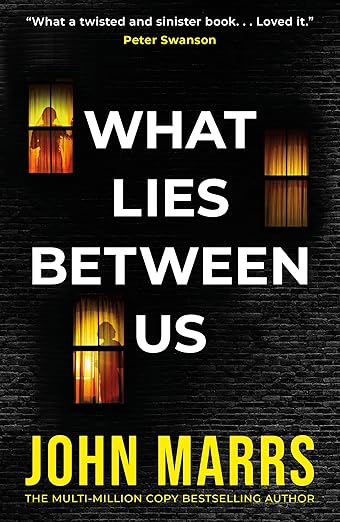
Every day I clean the Winchesters' beautiful house top to bottom. I collect their daughter from school. And I cook a delicious meal for the whole family before heading up to eat alone in my tiny room on the top floor.
I try to ignore how Nina makes a mess just to watch me clean it up. How she tells strange lies about her own daughter. And how her husband Andrew seems more broken every day. But as I look into Andrew's handsome brown eyes, so full of pain, it's hard not to imagine what it would be like to live Nina's life. The walk-in closet, the fancy car, the perfect husband.

Missive #654 Read More »

Missive #652 Published 31 January 2026

Joe and Ruth Austin, sixtyish, retire, withdraw, in California after their son, an existentialist with whom Joe could never sympathize, dies. On the one hand, on his property, he is confronted with a reproachful reminder of his boy, a bearded graduate student who squats on his property and does a Tar-Zen bit in a treehouse. Nearby the Catlins move in, a young couple, and Joe is particularly susceptible to Marian, frail, loving, and fiercely defensive of "all the little live things" and a belief that there are no evil forces in nature. Even though she is being rapidly destroyed by cancer and her race against death is being run against the birth of a child. All of this then refutes resignation with involvement, equates life in terms of its loss, even though it fails to mediate any of the other problems between the mature citizens and the coffeehouse kooks. "Why does the older generation feel as it does about what is happening in the world today?" (the publishers). Probably for the same reason that that same generation feels as it does about what is happening in the novel today—and this book will be a very compatible compromise.

Missive #652 Read More »

Missive #650 Published 28 January 2026

At Talavera in July of 1809, Captain Richard Sharpe, bold, professional, and ruthless, prepares to lead his men against the armies of Napoleon into what will be the bloodiest battle of the war. Sharpe has earned his captaincy, but there are others, such as the foppish Lieutenant Gibbons and his uncle, Colonel Henry Simmerson, who have bought their commissions despite their incompetence. After their cowardly loss of the regiment's colors, their resentment toward the upstart Sharpe turns to treachery, and Sharpe must battle his way through sword fights and bloody warfare to redeem the honor of his regiment by capturing the most valued prize in the French Army—a golden Imperial Eagle, the standard touched by the hand of Napoleon himself.

Missive #650 Read More »