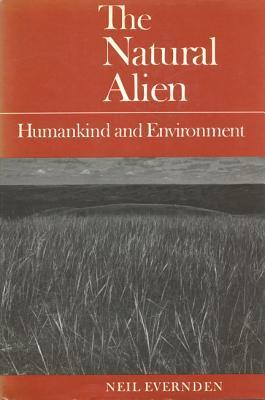
In this eloquent and sympathetic book, Evernden evaluates the international environmental movement and the underlying assumptions that could doom it to failure. Beginning with a simple definition of environmentalists as “those who confess a concern for the non-human,” he reviews what is inherent in industrial societies to make them so resistant to the concerns of environmentalists. His analysis draws on citing such diverse sources as Merleau-Ponty, Heidegger, and TIME , and examines how we tend to think about the world and how we might think about it.

This is from a podcast. First a teaser and then Michael Wolff quotes from it.
Inside Trump’s Head
Michael Wolff and Joanna Coles discuss Trump’s war with Iran as it unfolds in real time—revealing a commander-in-chief who appears to be running a war the same way he runs a rally: by ad-libbing moment to moment. From the bizarre return of Trump’s old “fire and fury” threat to wildly shifting claims about victory, surrender, and bombing Iran “back into the Stone Age,” Wolff explains why insiders say there is no plan—only improvisation. Meanwhile, Defense Secretary Pete Hegseth struggles to explain a strategy that may not exist, Republicans panic over rising gas prices ahead of the midterms, and Trump himself seems thrilled by the spectacle of it all. As the rhetoric escalates and the goals of the war remain undefined, Wolff and Coles expose the chaos, contradictions, and political risks behind a conflict that could end tomorrow—or spiral somewhere no one in Washington can predict.
He [Trump] has no plan. He doesn’t know what is going on. He’s not really capable of formulating a plan. He creates a cliffhanger and that also becomes something in his own mind as a point of pride: No one knows what I am going to do next. So everyone is afraid of me – so that gives me maximum leverage. Having no plan becomes the plan”.…
He’s on stage and he’s making it up as he goes along and is very proud of that ability, which is a considerable ability”.…
We’re going to stop the war. We’re going to start the war. We’re going to bomb them; we’re going to negotiate; we’re going to have an unconditional surrender. Nothing happens without emanating from him [Trump]. And that changes on a moment by moment basis.
Thomas Jefferson was a founder of the Democratic-Republican Party so it is only fitting that president Trump has adopted Jefferson’s position on war. After all Trump was a registered Democrat at one time, but even that does not mean much since he has changed his party affiliation five times.
…in war, they will kill some of us; we shall destroy all of them. — Thomas Jefferson
I love a good meme:
Some people drink deeply from the well of knowledge. Others seem to rinse and spit.
No job is so simple that it can’t be done wrong.