Claims about U.S. economic and geopolitical decline have become commonplace. This is due partly to the fact that its territorial economy after World War II was without peer until the 1960s and, in adjusting to the challenges of the ending of that era, U.S. businesses then began the process of foreign investment, increased trade, and global supply chains that has been labeled globalization. This has been widely viewed as hollowing out the U.S. manufacturing economy, even though it has been employment in labor-intensive manufacturing rather than overall output that has declined. Since the early 2000s, the reputational shocks from the ill-advised invasions of Iraq and Afghanistan in pursuit of fictive weapons of mass destruction and errant terrorists, plus the U.S.-originated financial crisis of 2008–2009, have provided much grist for speculation about U.S. decline in a world with a rising China and countries such as Iran and Russia openly challenging the so-called rules of international order about trade restrictions, human rights, open elections, military interventions, and so on preached by U.S. governments, if often hypocritically violated by them at the same time (e.g., Neumann Citation2023).
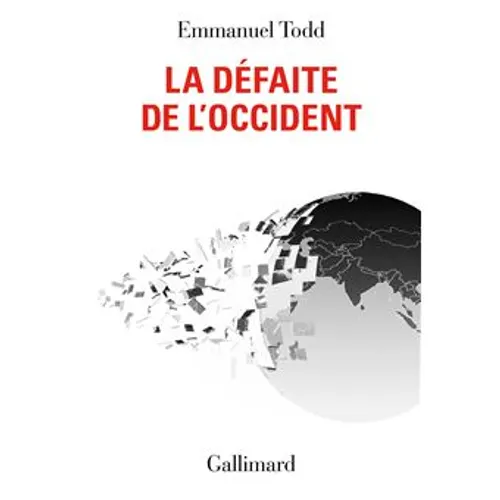
Emmanuel Todd, known previously mostly for his writing about how the dominance in different places of different family types (communal, nuclear, stem, etc.) drives differences in political ideology, but also for having predicted the Soviet collapse in 1979, reenters the fray about U.S. relative decline after producing several other books over the past years predicting the collapse of a U.S.-based global order. So far, this book has met with a largely positive reaction from pundits on the nationalist right in the United States and Europe, even though in the past Todd has never openly affiliated himself with such quarters. Perhaps the old right–left distinction, rooted in the French Revolution, has broken down. Todd is now clearly a sovereigntist, allied to a worldview in which an ethnically homogeneous nation-state, or at least one with a homogeneous political-economic elite, such as used to exist in Britain, France, and the United States before immigrants and minorities came along, no longer does. This means that these weakened states are no longer capable of challenging continuing or emergent nation-states such as China or Russia that he regards as culturally “stable” and able to better mobilize their populations politically and militarily. So, the claim about “defeat” is a much more cataclysmic one than that of just the decline of the United States from a hegemonic global political-economic position. It represents the coming total defeat of “the West,” a term that Todd associates primarily with the “Americanosphere” of the United States and its Anglo-Saxon allies rather than any sort of older civilizational usage, by “true” ethnonational states beginning with Russia in Ukraine. He bends himself out of shape showing how a presumed cultural impetus driving the West in the past that he associates with Protestant Christianity (via Max Weber), has more or less died out. In other words, rather like Tucker Carlson or Steve Bannon, if with somewhat more elaborate use of “empirical evidence,” albeit carefully selected, Todd is prophesying the victory of nationalism over a U.S.-sponsored globalism. They might differ with Todd only over whether it is indeed too late for the United States to ethnically cleanse itself and thereby become culturally “stable,” like Russia.
Todd frames his book entirely around the Ukraine War. This gives the book a clear focus if it also makes it vulnerable to contentious claims about the origins of the war and its likely outcome. The fog of war has already undermined early predictions about the ease with which Russian forces would overrun the country. The Introduction engages with six surprises of the war. The author completely accepts the view that the war is entirely one brought about by the United States and NATO. There is little or no attention to the actual history of NATO or how Russian government since the early 2000s scared recently liberated countries from Soviet rule into remembering that and pushing them into NATO’s arms (e.g., Rynning Citation2023). To Todd, however, it is strictly a one-way street. He also pays no attention at all to Russian President Vladimir Putin’s clearly articulated views about the impossibility of any sort of independent Ukraine, even a rump of the present territory. In this account, Putin is a victim of the expansive Americanosphere, yet he is also the leader of a readily mobilized population and economy that has bounced back from the imposition of sanctions and is going to be victorious over the United States and its allies operating through their Ukrainian surrogates.
The body of the book consists of eleven short chapters plus a postscript on the Gaza War. The first chapter is entitled “Russian Stability”; the second is “The Ukrainian Enigma”; the third is “Eastern Europe, Postmodern Russophobia”; the fourth is “What Is the West?”; the fifth is “The Assisted Suicide of Europe”; the sixth is “In Great Britain: Towards the Zero Nation (Crumbling Britannia)”; the seventh is “Scandinavia: From Feminism to Warmongering”; the eighth is “The True Nature of America: Oligarchy and Nihilism”; the ninth is “Deflating the American Economy”; the tenth is “The Washington Band”; and the eleventh is “Why the Rest of the World Has Chosen Russia.” A conclusion traces the phases of U.S. engagement with Ukraine from 1990 to 2022. The postscript uses the Gaza War to point up U.S. hypocrisy about military interventions and a presumed political-cultural urge to solve all political problems violently rather than peacefully.
The book is therefore more a set of essays than a narrative with an initial theoretical discussion followed by a series of empirical accounts testing the theoretical frame. To the extent there is an integrative theme, it is not surprising, with this author, that it concerns dominant family types and their role in maintaining or undermining the social and moral order of nation-states. We are thus more in the presence of a Durkheimian than any other understanding of social-political order. The role that religion, particularly Protestantism, once played in reinforcing collective ethnonational identities, in societies dominated by nuclear and stem family structures, has been undermined by secularization. An individualistic nihilism has replaced a more hierarchical and purposeful society. Thus, it is nation-states with communal-patrilineal family structures that today represent the most stable cultural forms and that are consequently the most hostile to the “woke culture” of gender fluidity and other trends emanating from the Americanosphere that undermine singular ethnonational identities. Two maps of the rate of patrilinearity in the world (p. 327) and homophobia in the world (p. 331) that are closely correlated make the case. By extension, a geopolitical order is undermined by the disintegration of the social and moral norms that historically held it together. I think that this is a fair description of the central logic of the book as a whole.
Chapters 2 and 5 are empirically the most engaging of the book. In the former Todd points to the historic divisions between eastern Ukraine and the rest of the country in terms of economy (coal mining and heavy industry in the east) as well as prevalence of Russian language and Russian identity. He takes care in challenging the idea that the whole of Ukraine is simply a part of Russia partly because the history of family types, particularly in western Ukraine, is very different from that in Russia. A useful discussion of the outmigration of likely Russian speakers from urban centers in central and eastern Ukraine (presumably mainly to Russia) after the Soviet collapse is followed by a focus on the regional divisions apparent in the 2014 presidential election and regional origins of leading contemporary Ukrainian political and economic figures. He ends by suggesting that the current war reflects a pathological obsession to the point of death wish in repelling Russia and a lack of clarity about what is truly “Ukraine” and what is not in determining the political object of the war when the state itself is not self-supporting but more or less a puppet of the Americans. Chapter 5 makes the case for a Europe increasingly less self-reliant and driven by imperatives largely deriving from the United States. Germany is singled out as suffering from a collective memory, that of World War II, which now makes the country incapable of responding except passively to external pressures, particularly, no surprise, from the United States. Its economic significance belies the fact that it is militarily insignificant. Todd puts this down to the “absence of a national conscience” (p. 179). Later, however, he sees a more independent Germany as a potential ally with Russia in a more territorialized world. Quite how this will be realized is not very clear given the negative cultural verdict about contemporary Germany.
Many of the other chapters are frankly polemical without much empirical justification on offer, let alone confrontation with alternative plausible hypotheses. In Chapter 6, for example, British economic dysfunction, dating back arguably long before British universities began to host students of minority origin, is put down to “an informal affirmative action, a vengeance exercised by the English upper-middle classes against their plebs” (p. 227). Across several chapters, the percentage of university students engaged in engineering is taken as a mystical sign of the overall condition of a national economy. This makes Russia look good because it has a much higher percentage than does the United States or do most Western European countries. Whether or not this is a good indicator of anything much is never justified. Indeed, if you look at what the Russian engineers actually do, the significance of the indicator disappears. If the number of engineers supposedly indicates innovativeness, then Russian engineers are singularly noninnovative. In 2023 Russia ranked tenth in the world in patents issued on new inventions, far behind China, the United States, and many other countries. Todd also fixates on Russia’s possession of hypersonic missiles when these are both problematic as weapons according to many sources (not least in how to distinguish between conventional and nuclear armed ones) and other countries also possess them (e.g., Wright and Cameron Citation2024). In fact, the chapter on Russia (Chapter 1) is far and away the weakest of the book in backing up any claims with substantial empirical evidence. The rosy view of the economic performance of Russia, missing any discussion of the dominant role of extractive sectors and massive reliance on manufactured imports, is paralleled by an amazingly indulgent view of Putin’s reliance on corruption and patrimonialism to keep order across Russia and its multiethnic populations. The presentation is also rampant with sound-bite phrases that defy much of what is offered by way of justification. Some are plainly ludicrous. Of multiple examples the following are illustrative: “in the West, the nation-state does not exist” (p. 25); “The priority of the Russians is not to seize a maximum of territory [in Ukraine] but to lose a minimum of men” (p. 66); on the United States: “Their economic dependence on the rest of the world has become immense; their society is decomposing” (p. 240); and “If the Blacks are heavily overrepresented in American prisons, with 40% of those detained, they are also in Biden’s cabinet” (p. 288).
Finally, his discussion of the United States in Chapters 8 through 10 is remarkably thin. His account of U.S. religiosity is ill-informed and based more on projection from the fading influence of the Puritans than on engaging with recent religious history. He claims the economy has declined because of the increase of imports when as is well known the United States remains one of the countries least involved overall in world trade. The shortage of ammunition in Ukraine is ascribed to the failures of the U.S. military-industrial complex when it has had much more to do with funding controversy and matching ammunition to types of weapons. He puts down the “blob” in Washington as just a self-serving in-group when it was once a true ruling class of WASPs. This latter is now therefore a “shallow state” without the soul of the true nation-states. Yet, many of those named and shamed by Todd, like Samantha Power and Antony Blinken, exhibit a messianic attachment to U.S. interventions on behalf of “democracy” worldwide that previous generations also shared and, if in less individualistic form, did Russia’s nineteenth-century empire builders and postrevolutionary communists. Toward the end of his Democracy in America, de Tocqueville ([Citation1835] 2002) predicted that the two territorial empires in construction would come to dominate world politics. The United States and Russia thus share much in common, not the least, long-standing empires at home and expansionist tendencies abroad allied to oligarchic governmental regimes albeit of different types (e.g., on the United States, see Mullins and Mullins Citation2024; on Russia see Dawisha Citation2015).
This book is a sustained attack on the changing mores of Western society over the past fifty years and the geopolitical backlash this portends elsewhere around the world. This is largely related to the globalization of the world economy and the spread of the individualistic worldview (sometimes labeled as “narcissist” and at other times as “nihilist”) along with the supply chains and “dependencies” of distant places as Todd sees them that this has created. Yet, of course, the increase in standards of living around the world over the past fifty years owes something to this transformation, not least in China. Even Russia in its current war in Ukraine has had to turn to Iran for drone designs and African engineers to staff its drone factory (Faucon, Bariyo, and Luxmoore Citation2024). It is also far from clear that only collectivist societies are necessarily more mobilizable around common goals than more individualistic ones. It all depends on institutions, of which family is only one and religious affiliation only another. There could well be more anomie across Todd’s West than once was the case—social media, increasing loneliness, aging populations, and consumerism all contribute. Whether this all adds up to an imminent victory for Vladimir Putin’s fear of Western liberalism and “the defeat of the West” is something else again. Perhaps “Whoever lives in the Kremlin owns time” (Da Empoli Citation2022, 96) but as Todd’s bête-noire, the Le Monde journalist Kauffmann (Citation2023), reminded us, in the first ten years of his rule, Putin’s political-economic model of extractive rents and oligarchs produced allies in Germany (natural gas), England (money/real estate), and France (security). Now all of this is in tatters. In substituting nearby territorial domination for global seduction by invading Ukraine, whose seduction he could previously have pursued, too, Putin has put all his money on one horse, so to speak. None of us knows the ultimate outcome there, or worldwide of course, excluding Emmanuel Todd, who is very sure indeed. — Book Reviews La Défaite de l’Occident [The Defeat of the West] by John Agnew in The AAG Review of Books, Volume 12, Issue 4 (2024)

The review that I have copied was written soon after the book was published in French. It has subsequently been published in 21 other languages but not in English. The author of the review “protests too much” in my opinion and I think that is one of the reasons it has not been translated into English. The Google translation that I read was poor but I think Todd made good points. One final quote from the book.
What Engels or Lenin could not imagine (but what Hobson had glimpsed) was that the Western proletariat could be completely transformed into plebs living largely off the labor of the Chinese and other peoples of the world.
I have just understood, a little late I admit, that this world has come about thanks to globalization, which has brought consumer society to its final stage. Until around 1980, workers in America, France and elsewhere consumed, for the most part, what they produced: it was the first society of consumption, resulting from the Trente Glorieuses. But the relocation of Western factories then transformed people. The objects of their consumption are now produced elsewhere. The working proletariat of the 1950s turned into plebs in the 2000s, at the instigation of theorists and practitioners of the globalized economy. What I write here, I point out, is strictly in accordance with the theory set out in the most orthodox international economics textbooks. The theory of free trade is only interested in the consumer, who must be able to buy the goods he needs at the lowest price, and its apostles constantly threaten Western peoples with having to pay more for their food, their clothing , their cell phones, their cars, their medicines, their children’s toys and their garden gnomes if they persist in wanting to make them themselves. The apostles won, but their victory had sociopolitical consequences that they had not anticipated.