Missive #706 Published 4 May 2026

This is the last book in the series. The author died a month after it was published so there will be no more although she did have other stand alone books published that I will read
Missive #706 Published 4 May 2026
This is the last book in the series. The author died a month after it was published so there will be no more although she did have other stand alone books published that I will read
Missive #704 Published 2 May 2026
A word of warning - if you are one of those ultra-modern people who can't get along with characters who are restrained and circumspect, who do not communicate their feelings with modern-day standards of openness etc, this book won't be for you. I know from reading reviews that a lot of such readers do exist. The people who populate this book are circumspect, discreet and undemonstrative to a very high degree. If that bothers you, give this book a miss. As great as it is, you probably won't like it.
Missive #702 Published 27 April 2026
How to Slay a Wizard is about the people who run the tricks, the tricks themselves, and the one lie at the root of every spell ever cast on a living man or woman. It is not a political book. It is not a religious book. It is a book about manipulation, who does it, how it works, and why it requires your participation to be effective.
This book will teach you what a wizard is, what an alchemist is, and why the difference matters. It shows how spells are structured like jokes that never deliver the punchline. It explains why the most forbidden word in America is forbidden and what the vampire myth is actually describing. It tells you how to spot a liar before the lies take root. And at the very end, the book exposes the one lie that has to be believed in order for any of it to work on you. It is so simple you might laugh. That's the point.
Missive #699 Published 22 April 2026
I may have read this book many years ago but glad that I have read it now. A entertaining book that brings to light what the military is like in many respects. Recommended.
Missive #698 Published 20 April 2026
In 1517, Martin Luther nailed his 95 theses to the wall of Wittenberg church. He argued that the Church’s internally consistent but absurd doctrines had pickled into a dogmatic structure of untruth. It was time for a Reformation. Half a millennium later, Steve Keen argues that economics needs its own Reformation. In Debunking Economics , he eviscerated an intellectual church – neoclassical economics – that systematically ignores its own empirical untruths and logical fallacies, and yet is still mysteriously worshipped by its scholarly high priests.
Missive #696 Published 18 April 2026

This is the second essay, published as a book, in the 'Future series'. I again asked ChatGPT to write the book review which I think is much better than the promo.
Missive #694 Published 16 April 2026
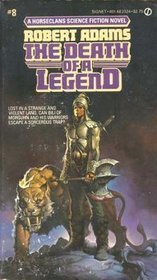
When the Witchmen caused the earth to move and called forth the fires from the mountain's inner depths, the Moon Maidens, Ahrmehnee, and Thoheeks Bili's troops barely escaped with thier lives. Driven by the flames into territory said to be peopled by monstrous half-humnas, Bili was forced to choose between braving the dangers of nature gone mad or fighting the savage natives on their own ground. But before he could decide, his troops were spotted by the beings who claimed this eerie land as their own and would use powerful spells of magic and illusion to send any intruders to their doom...
Missive #693 Published 14 April 2026
This book is the first in a series that are essays that have been published as books although they are very short. The Book Review was written by ChatGPT at my request. It is my plan to ask for more such reviews for the books in this series and perhaps for other books. I think what was said here by ChatGPT is of more value to a potential reader than a Book Promo from the publisher and repeated by goodreads.com or Amazon.
Missive #692 Published 13 April 2026
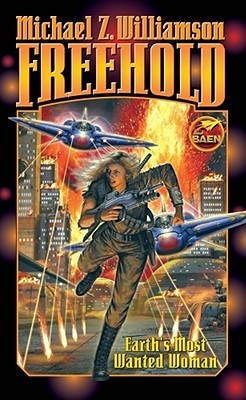
Freehold is a military science fiction novel by , published in 2004 by. [The first book in the Freehold series] The book tells the story of Kendra Pacelli, a young soldier who begins the book in the service of a world-dominant, authoritarian United Nations. Accused of a crime she did not commit, she flees Earth for the Freehold of Grainne where she struggles to adapt to the climate and culture of an ultra-libertarian planet. She eventually joins the Freehold military and fights in a war against a UN invasion.
Missive #689 Published 7 April 2026
In both Europe and North America, populist movements have shattered existing party systems and thrown governments into turmoil. The embattled establishment claims that these populist insurgencies seek to overthrow liberal democracy. The truth is no less alarming but is more complex: Western democracies are being torn apart by a new class war.
In this controversial and groundbreaking new analysis, Michael Lind, one of America's leading thinkers, debunks the idea that the insurgencies are primarily the result of bigotry, traces how the breakdown of mid-century class compromises between business and labor led to the conflict, and reveals the real battle lines.