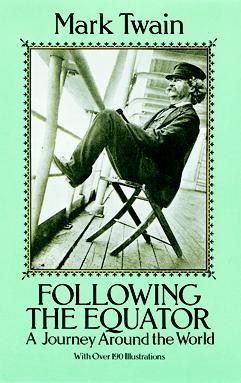
Life on the Mississippi is a memoir by Mark Twain of his days as a steamboat pilot on the Mississippi River before the American Civil War published in 1883. It is also a travel book, recounting his trips on the Mississippi River, from St. Louis to New Orleans and then from New Orleans to Saint Paul, many years after the war. — Wikipedia
In this stunning new book, Christopher F. Rufo exposes the inner history of the left-wing intellectuals and militants who slowly and methodically captured America's institutions, with the goal of subverting them from within. With profiles of Herbert Marcuse, Angela Davis, Paulo Freire, and Derrick Bell, Rufo shows how activists have profoundly influenced American culture with an insidious mix of Marxism and racialist ideology. They've replaced "equality" with "equity," subverted individual rights in favor of group identity, and convinced millions of Americans that racism is endemic in all of society. Their ultimate goal? To replace the constitution with a race-based redistribution regime, administered by "diversity and inclusion" commissars within the bureaucracy.
A good book but not as good as the author's historical fiction. There is one more in his Sailing Thrillers series and then I'll be going back to what he does best.
Science, Liberty and Peace is an essay written by Aldous Huxley, published in 1946. The essay is an opinionated discussion covering a wide range of subjects reflecting Huxley's views towards society at that time. He puts forward a number of predictions, many of which turned out to be true up to 60 years later. A consistent theme throughout the essay is Huxley's preference towards a decentralised society.
1677, on a late summer's evening two ships lurk off the coast of southwest Ireland. They are Barbary corsairs from North Africa, slave catchers. As soon as it is dark, their landing parties row ashore to raid a small fishing village — on the hunt for fresh prey…
In the village, seventeen-year-old Hector Lynch wakes to the sound of a pistol shot. Moments later he and his sister Elizabeth are taken prisoner.
This book was published in 1954 so it is dated even with the Afterword by his wife, Ruth M. White, in 1967 and a Postscript in 1976 it is still dated. However, the history is well worth reading and the geography has not changed. A good book for anyone that knows nothing about the Adirondacks.
This is a good book but if you have read The 'Men Who Made the Nation' it is probably not necessary that you read this one. The author wrote 'The Men Who Made the Nation' for the Mainstream of America Series and then wrote this one so his publisher could garner some additional sales.
Based on real events of 400 years past [The Steel Bonnets read 24 March 2023], this is a vivid depiction of the terror and brutality of life on the Anglo-Scottish Border. To the young Lady Margaret Dacre, raised in the rich security of Queen Elizabeth's court, the Scottish Border is a land of blood and violence, where her inheritance lay at the mercy of the outlaws and feuding tribes of England's last frontier.
First published in 1940, James Still's masterful novel has become a classic. It is the story, seen through the eyes of a boy, of three years in the life of his family and their kin. He sees his parents pulled between the meager farm with its sense of independence and the mining camp with its uncertain promise of material prosperity.
This is an interesting book but in my opinion is muddled . He moves the chronology around such that I found it difficult to keep track of when events were happening. There does not seem to be any continuity to an overall story; each of the '21 laws' stand alone for the most part. I may try some of his other books.