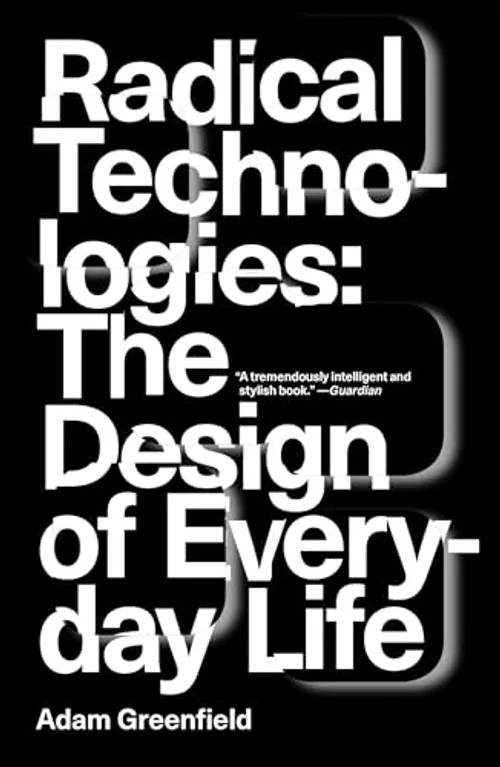
A field manual to the technologies that are transforming our lives
Everywhere we turn, a startling new device promises to transfigure our lives. But at what cost? In this urgent and revelatory excavation of our Information Age, leading technology thinker Adam Greenfield forces us to reconsider our relationship with the networked objects, services and spaces that define us. It is time to re-evaluate the Silicon Valley consensus determining the future.
Having successfully colonized everyday life, these radical technologies are now conditioning the choices available to us in the years to come. How do they work? What challenges do they present to us, as individuals and societies? Who benefits from their adoption? In answering these questions, Greenfield’s timely guide clarifies the scale and nature of the crisis we now confront —and offers ways to reclaim our stake in the future. — Book promo @ goodreads.com
The very first lesson of mapping on the smartphone, then, is that the handset is primarily a tangible way of engaging something much subtler and harder to discern, on which we have suddenly become reliant and over which we have virtually no meaningful control. We ordinarily don’t experience that absence of control as a loss. Simultaneously intangible and too vast to really wrap our heads around, the infrastructure on which both device and navigation depend remains safely on the other side of the emotional horizon. But the same cannot be said for what it feels like to use the map, where our inability to make sense of what’s beneath our fingertips all too frequently registers as frustration, even humiliation. Here we’re forced to reckon with the fact that the conventions of interaction with the device are obscure or even inexplicable to many. Spend even a few minutes trying to explain basic use of the device to someone picking it up for the first time, and you’ll realize with a start that what manufacturers are generally pleased to describe as “intuitive” is in fact anything but. When we do fail in our attempts to master the device, we are more likely to blame ourselves than the parties who are actually responsible. And while there will no doubt come a point at which everyone alive will have been intimately acquainted with such artifacts and their interface conventions since earliest childhood, that point remains many years in the future. Until that time, many users will continue to experience the technics of everyday life as bewildering, overwhelming, even hostile.

I went to the RV shop yesterday morning and got the first half of the roof coating done, power washed the roof. Today I’ll be getting the coating applied but first they will service the A/C. With any luck at all I’ll then be ready to leave here at the end of this month and go to my summer camp. This is assuming that the weather cooperates and there is sun today versus the clouds that we have had for the past few days.