Missive #696 Published 18 April 2026

This is the second essay, published as a book, in the 'Future series'. I again asked ChatGPT to write the book review which I think is much better than the promo.
Missive #696 Published 18 April 2026
This is the second essay, published as a book, in the 'Future series'. I again asked ChatGPT to write the book review which I think is much better than the promo.
Missive #695 Published 17 April 2026
135. Nasruddin and the Box
Nasruddin’s friend gave him a box for safekeeping. “I’ll be back to collect it tomorrow or the day after. But whatever you do, don’t look in the box!”
“I understand,” said Nasruddin. “Don’t worry.”
“Thank you!” said Nasruddin’s friend, and he left.
Of course Nasruddin immediately opened the box. There was baklava inside!
He ate one piece.
Then another.
And another.
Finally he had eaten it all.
When his friend returned for the box, he opened it and saw it was empty.
“What happened to the baklava?” he asked.
“Don’t ask,” Nasruddin replied, “and I won’t have to tell you.”
Missive #694 Published 16 April 2026
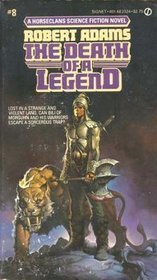
When the Witchmen caused the earth to move and called forth the fires from the mountain's inner depths, the Moon Maidens, Ahrmehnee, and Thoheeks Bili's troops barely escaped with thier lives. Driven by the flames into territory said to be peopled by monstrous half-humnas, Bili was forced to choose between braving the dangers of nature gone mad or fighting the savage natives on their own ground. But before he could decide, his troops were spotted by the beings who claimed this eerie land as their own and would use powerful spells of magic and illusion to send any intruders to their doom...
Missive #693 Published 14 April 2026
This book is the first in a series that are essays that have been published as books although they are very short. The Book Review was written by ChatGPT at my request. It is my plan to ask for more such reviews for the books in this series and perhaps for other books. I think what was said here by ChatGPT is of more value to a potential reader than a Book Promo from the publisher and repeated by goodreads.com or Amazon.
Missive #692 Published 13 April 2026
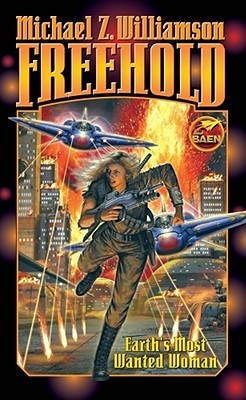
Freehold is a military science fiction novel by , published in 2004 by. [The first book in the Freehold series] The book tells the story of Kendra Pacelli, a young soldier who begins the book in the service of a world-dominant, authoritarian United Nations. Accused of a crime she did not commit, she flees Earth for the Freehold of Grainne where she struggles to adapt to the climate and culture of an ultra-libertarian planet. She eventually joins the Freehold military and fights in a war against a UN invasion.
Missive #691 Published 12 April 2026
Continuing The Anti-Federalist Papers
Federal Farmer XIV
by Federal Farmer
Missive #690 Published 10 April 2026
134. Where’s the Halvah?
Nasruddin went to the grocer.
“I want some halvah, please,” he said.
“My apologies,” said the grocer. “I don’t have any halvah.”
“That’s impossible!” exclaimed Nasruddin. “How can a grocer not have halvah? I simply don’t understand. Tell me: do you have any flour?”
“Yes,” said the grocer.
“And what about sugar? Do you have any sugar?”
“Yes,” said the grocer.
“And do you have butter? Surely you have butter!”
“Yes,” said the grocer.
“So, isn’t it obvious? Everything you need is here!” Nasruddin concluded. “If you have flour and sugar and butter, why don’t you go make some halvah?”
Missive #689 Published 7 April 2026

In both Europe and North America, populist movements have shattered existing party systems and thrown governments into turmoil. The embattled establishment claims that these populist insurgencies seek to overthrow liberal democracy. The truth is no less alarming but is more complex: Western democracies are being torn apart by a new class war.
In this controversial and groundbreaking new analysis, Michael Lind, one of America's leading thinkers, debunks the idea that the insurgencies are primarily the result of bigotry, traces how the breakdown of mid-century class compromises between business and labor led to the conflict, and reveals the real battle lines.
Missive #688 Published 5 April 2026
Continuing The Federalist Papers
Federalist No.70
The Executive Department Further Considered
Author: Alexander Hamilton
To the People of the State of New York:
Missive #687 Published 3 April 2026
133. Nasruddin Eats an Apple
Nasruddin walked by the grocer’s stall in the market. He was feeling very hungry, but he didn’t have any money.
As he looked at the heap of apples on display, Nasruddin could not resist. He reached out, grabbed one of the apples, and bit into it. “Delicious!” he exclaimed.
“Hey there!” shouted the grocer. “You can’t do that!”
“What do you mean?” asked Nasruddin.
“I mean you can’t eat that apple without paying for it,” shouted the grocer. “It’s not ethical!”
“Oh, that’s not a problem!” Nasruddin replied happily. “I’m eating this apple because it’s nutritional, not because it’s ethical.”