Old Site Menu

Author name: Ed Frey

Missive #619 Published 22 December 2025

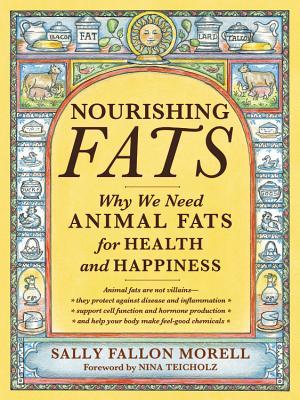
This is a very interesting book. It might be a bit over the top with some of the medical and scientific terminology but is readable. Much like with the COVID jab you need not follow the science regarding saturated fats just follow the money.

Missive #619 Read More »

Missive #618 Published 21 December 2025

Continuing The Anti-Federalist Papers

Federal Farmer VI
by Federal Farmer

Missive #618 Read More »

Missive #617 Published 19 December 2025

118. The Poor Man in the Coffeehouse

Nasruddin saw a stranger in the coffeehouse who looked very sad.
“Is something the matter?” Nasruddin asked him.
“I used to be rich!” said the man. “I lived in a mansion, and I had many servants. But I’ve lost it all: money, mansion, servants, everything. I can barely pay for this coffee. Soon I’ll be begging on the streets. I’m sick with worry.”
“Oh, you won’t have to feel like this for long,” Nasruddin assured him.
The man looked at Nasruddin eagerly. “Do you mean I’ll get rich again?”
“No,” said Nasruddin. “I mean you’ll get used to being poor.”

Missive #617 Read More »

Missive #616 Published 17 December 2025

Keillor leads here from his strength—humor based on a true grip on the real—in this epic of Lake Wobegon, the imaginary small Minnesota town celebrated in Keillor's weekly monologues on "Prairie Home Companion," his show on Public Radio. Keillor's fans will grab it, but word should get out to people who never heard of him: like Mark Twain, Keillor is a highly sophisticated teller of tales (his stories have appeared in The New Yorker) who gets to the essence of everyday America. There are some belly laughs in "Wobegon," many chuckles—and always the pleasure of recognition. The book casually mixes autobiographical stretches with stories about the inhabitants of the town that can't be found on the Minnesota map, along with its history and mores.

Missive #616 Read More »

Missive #615 Published 15 December 2025

Author Gene Logsdon—whom Wendell Berry once called “the most experienced and best observer of agriculture we have”—has a notion: That it is a little easier for gardeners and farmers to accept death than the rest of the populace. Why? Because every day, farmers and gardeners help plants and animals begin life and help plants and animals end life. They are intimately attuned to the food chain. They understand how all living things are seated around a dining table, eating while being eaten. They realize that all of nature is in flux.
Gene Everlasting contains Logsdon’s reflections, by turns both humorous and heart-wrenching, on nature, death, and eternity, all from a contrary farmer’s perspective. He recounts joys and tragedies from his childhood in the 1930s and ‘40s spent on an Ohio farm, through adulthood and child-raising, all the way up to his recent bout with cancer, always with an eye toward the lessons that farming has taught him about life and its mysteries.

Missive #615 Read More »

Missive #614 Published 14 December 2025

Continuing The Federalist Papers

Federalist No.62
The Senate
Author: Alexander Hamilton or James Madison
To the People of the State of New York:

Missive #614 Read More »

Missive #613 Published 13 December 2025

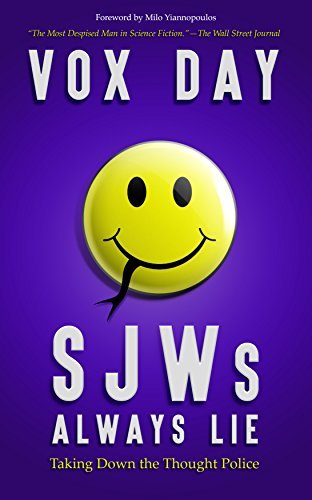
Social Justice Warriors have plagued mankind for more than 150 years, but only in the last 30 years has their ideology become dominant in the West. Having invaded one institution of the cultural high ground after another, from corporations and churches to video games and government, there is nowhere that remains entirely free of their intolerant thought and speech policing.

Because the SJW agenda of diversity, tolerance, inclusiveness, and equality flies in the face of both science and observable reality, SJWs relentlessly work to prevent normal people from thinking or speaking in any manner that will violate their ever-mutating Narrative. They police science, philosophy, technology, and even history in order to maintain the pretense that their agenda remains inevitable in a modern world that contradicts it on a daily basis.

Missive #613 Read More »

Missive #612 Published 12 December 2025

117. The Proper Way to Beg

A beggar approached Nasruddin on the street.
“Please, kind sir,” he said, “could you possibly give me a coin or two?”
Nasruddin was indignant. “It’s not at all proper for a rich man such as myself to give a beggar such a paltry sum.”
The beggar bowed apologetically. “Please, kind sir, forgive my mistake,” he said. “Could you possibly give me a hundred coins?”
Nasruddin became even more indignant. “It’s not at all proper for a beggar like yourself to ask a complete stranger to give him a hundred coins!” he exclaimed.
And with that, Nasruddin continued on his way.

Missive #612 Read More »

Missive #611 Published 10 December 2025

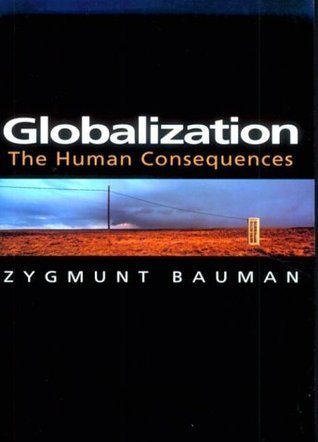
The word "globalization" is used to convey the hope and determination of order-making on a worldwide scale. It is trumpeted as providing more mobility—of people, capital, and information—and as being equally beneficial for everyone. With recent technological developments—most notably the Internet—globalization seems to be the fate of the world. But no one seems to be in control. As noted sociologist Zygmunt Bauman shows in this detailed history of globalization, while human affairs now take place on a global scale, we are not able to direct events; we can only watch as boundaries, institutions, and loyalties shift in rapid and unpredictable ways. Who benefits from the new globalization? Are people in need assisted more quickly and efficiently? Or are the poor worse off than ever before? Will a globalized economy shift jobs away from traditional areas, destroying time-honored national industries? Who will enjoy access to jobs in the new hierarchy of mobility?

Missive #611 Read More »

Missive #610 Published 8 December 2025

Heat-Moon offers a view of 1848 America via a British doctor’s journal in this introspective adventure narrative. After 34-year-old physician Nathaniel Trennant gives a lecture in London on fantastical beasts, an American sea captain in attendance offers him a berth on the Narwhale for a cross-Atlantic voyage. The philosophically minded doctor accepts, writing in his journal that he has a “slender notion of why I am outward bound, but I am quite lacking awareness of what I am bound for.

Missive #610 Read More »